What Garage Door Rollers Do and Why They Wear Out
Every sectional garage door rides on a set of small wheels called rollers. Each roller has a wheel that travels inside the steel track and a stem (sometimes called a shaft) that slides into a hinge or bracket on the edge of the door. A typical two-car door has ten to fourteen of them, and every single one carries part of the door's weight as it moves through the curve and into the horizontal track overhead.
Because they turn every time the door opens or closes, rollers are one of the hardest-working parts of the system. Over thousands of cycles the bearings dry out, the wheels flatten or chip, and the stems bend or wear grooves where they ride in the hinges. When that happens, the door gets louder, rougher and harder on the opener. For homeowners in Germantown, where garages see road salt, slush and big temperature swings for a good part of the year, roller wear tends to show up sooner than the parts' original design life might suggest.
Roller replacement is a straightforward repair when it is done correctly, and it is one of the most noticeable upgrades you can make to an older door. Many customers are surprised by how much quieter and smoother the door feels after a fresh set goes in.
Signs Your Rollers Need Attention
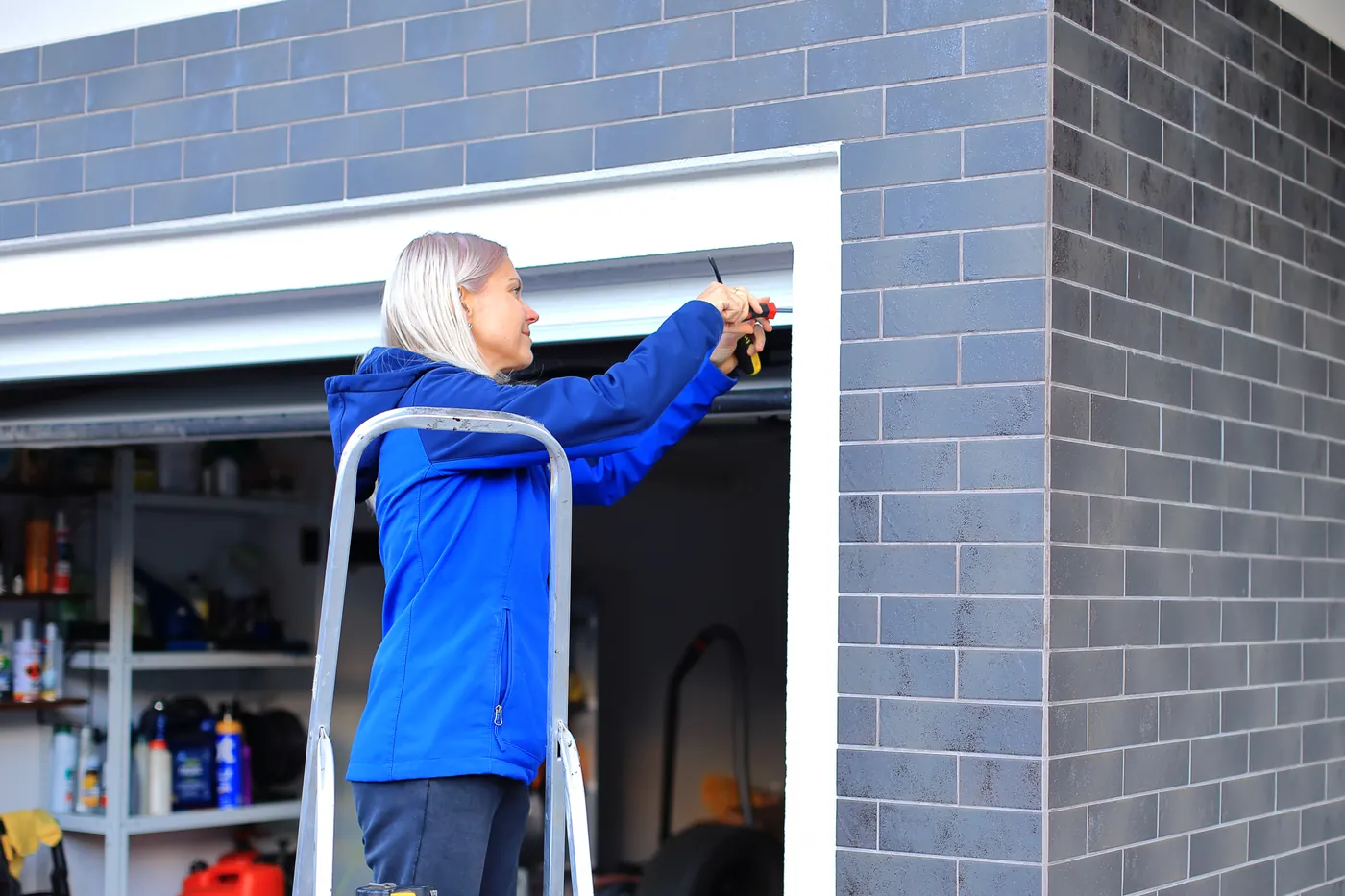
Rollers rarely fail all at once. Instead, they give a series of warnings that get steadily worse. If you notice any of the following, it is worth having the rollers looked at before a small problem turns into a door that jumps the track.
- Grinding, squealing or rumbling noises that you can hear from inside the house
- The door shakes, jerks or vibrates as it travels, especially through the curve
- Rollers that visibly wobble or tilt in the track instead of rolling straight
- Wheels that are cracked, chipped, flattened on one side or missing bearings
- Rust on the bearings or stems, or orange streaks running down the track
- Stems that are bent, worn thin or sliding loosely in their hinges
- A gap between the door and the track that is wider on one side than the other
- The opener strains, slows down or reverses partway through a cycle
A single bad roller can make the whole door sound terrible, but it is rarely the only worn one. Rollers on the same door have usually done the same amount of work, so when one is failing, the rest are often close behind.
Why Rollers Wear Faster in Wisconsin Garages
Our climate is tough on moving metal parts. In winter, cars bring in slush loaded with road salt from Pilgrim Road, Mequon Road and the Highway 41/45 corridor. As that slush melts on the garage floor, the moisture and salt get into the lower rollers and the bottom of the tracks. Unsealed steel bearings are especially vulnerable; once salt and water get inside, rust forms quickly and the bearing starts to bind.
Cold snaps add another layer. When temperatures drop below zero, grease thickens and older rollers can stiffen up, causing the wheels to skid along the track instead of turning. That skidding wears flat spots into the wheels. Freeze and thaw cycles in spring can also cause ice to build up in the bottom of the track, which knocks rollers out of line.
Humid summers finish the job by keeping surfaces damp and encouraging corrosion. Many homes in Germantown and nearby communities like Menomonee Falls, Richfield and Jackson were built in the 1970s through the 1990s, and plenty of them still have the original builder-grade steel rollers. After decades of this cycle, those rollers are often well past their useful life.
Steel, Nylon and Sealed-Bearing Rollers Explained
Not all rollers are the same, and choosing the right type makes a real difference in noise, longevity and how the door handles our weather. Here is how the common options compare.
Standard Steel Rollers
Stamped steel wheels with open ball bearings. They are durable and inexpensive, which is why builders use them, but they are the noisiest choice and their open bearings collect dirt and rust. They need regular lubrication to stay smooth.
Basic Nylon Rollers
Nylon wheels with no bearings or with a simple bushing. They are quieter than steel and do not rust, but low-end versions wear quickly and can crack in hard cold. They are best suited to light, single-car doors with modest use.
Nylon Rollers with Ball Bearings
Nylon wheels built around a precision ball bearing. They roll smoothly, run much quieter than steel and handle frequent daily use well. For most residential doors in Germantown, this is the upgrade we recommend.
Sealed-Bearing Rollers
The bearing is enclosed so moisture, salt and grit cannot get in. They typically need little or no lubrication and hold up well in salty, damp garages. A strong choice for doors used several times a day or garages that see a lot of winter slush.
Long-Stem Rollers
Some doors, especially insulated or heavier models, need a longer stem to reach properly into the hinge or to clear thicker sections. We match stem length to your hardware so the roller sits correctly in the track.
Heavy-Duty Rollers
Larger wheels and thicker stems designed for oversized, wood or heavily insulated doors, and for light commercial use. They spread the load better and resist bending when the door is heavy.
We will look at your door's weight, how often you use it and how your garage is exposed to the weather, then explain the options in plain terms. You choose what fits your budget and priorities, and you get an upfront price before any work starts.
What Happens During a Roller Replacement Visit
Changing rollers sounds simple, but the bottom rollers sit in brackets that are connected to the lift cables, and those cables are under tension from the springs. That is why roller work needs to be done carefully and in the right order.
- Inspect the whole door. We check the rollers, hinges, tracks, cables, drums and springs, and watch the door run so we can hear and see where the trouble is coming from.
- Secure the door safely. The door is clamped in place and, where needed, spring tension is managed properly before any part tied to the cables is touched.
- Remove the old rollers. Rollers in the middle hinges come out by loosening the hinge or easing the track. Bottom and top brackets are handled with extra care because of their connection to the cable and spring system.
- Check hinges and stems. Worn or cracked hinges often show up once the old rollers are out. We point out anything that needs attention so the new rollers sit in solid hardware.
- Install the new rollers. Each roller is seated fully in its hinge or bracket and set at the correct depth in the track.
- Adjust, lubricate and test. We align the tracks if needed, lubricate the hinges and any bearings that call for it, then run the door several times and confirm the opener's force and auto-reverse settings.
Most roller jobs are finished in a single visit. If we find a related problem, such as a frayed cable or a bent track, we explain it and give you a price before doing any extra work.
Is Your Garage Door Grinding or Shaking?
Tell us what you are hearing and seeing, and we will set up a visit to inspect your rollers and the rest of the door. You get a clear explanation and an upfront price before work begins.
Get a Free QuoteNoise, Wobble and Worn Stems: What They Tell Us
Different symptoms point to different kinds of roller wear. A steady rumbling or grinding sound usually means the bearings are dry, rusted or breaking apart. Squealing often comes from metal-on-metal contact where a wheel is no longer turning freely. A clicking or popping noise as the door passes through the curve can mean a roller is catching on a worn track joint or that a wheel has a chipped edge.
Wobble is a sign that the stem or the hinge is worn. When a roller tilts in the track, it no longer carries the load evenly, and the door can rub against the track or the weatherstrip. Over time the hinge hole wears into an oval, and the stem gets thinner where it rubs. At that point, swapping only the wheel is not enough; the hinge may need replacement too, or the door will keep wobbling.
Bent stems usually come from a door that was hit by a car, pushed off the track or forced closed while something was in the way. A bent stem puts the wheel at an angle, which causes uneven wear on the track and can eventually let the roller pop out. If a door has come off its tracks before, it is very common to find several bent stems.
Replace a Few Rollers or the Whole Set?
We are happy to replace a single roller if that is all that is truly needed, such as after a minor bump. In most cases, though, we recommend replacing the full set. Rollers wear at roughly the same rate, so new rollers mixed with old ones can make the door run unevenly. You also save the cost of another visit when the next roller fails a few months later.
Factors that affect the cost of a roller job include the number of rollers on your door, the roller type you choose, whether hinges or brackets also need replacing, and whether the tracks need adjustment. We explain each of those at the visit and give you the price before starting.
Rollers are also a good moment to look at the bigger picture. If your door has rust-damaged sections, failing springs or a struggling opener, it can make sense to address those together. Sometimes that means spring replacement or track replacement at the same time, and occasionally an older door is worn enough that a new garage door installation is the better value. We will give you an honest take either way.
Safety: What Homeowners Should and Should Not Do
Some roller maintenance is perfectly safe to do yourself. You can look over the rollers for cracks and rust, spray a garage-door-rated lubricant on steel bearings and hinge pivots, and keep the bottom of the tracks clear of ice, leaves and debris.
The bottom roller brackets are a different story. They are attached to the lift cables, and those cables are held tight by springs storing a large amount of energy. Loosening those brackets, or trying to release cable or torsion spring tension, can cause the bracket or cable to snap loose with enough force to cause serious injury. Please do not adjust or remove bottom brackets, cables or torsion springs yourself. Leave that work to a trained technician with the right tools.
It is also a good idea to test your opener's safety features every month. Check that the photo-eyes on each side of the door face each other and are clean, and place a board or a roll of paper towels flat under the door to make sure it reverses when it touches the object. If it does not, call for opener repair before using the door again.
Keeping New Rollers Running Smoothly
A little maintenance goes a long way, especially in a Wisconsin garage. These simple habits help new rollers last and keep the door quiet.
Lubricate Twice a Year
Use a silicone or lithium spray made for garage doors on hinges and any unsealed bearings. Fall and spring are good times. Do not grease the inside of the track; it only collects grit.
Rinse Away Salt
During winter, sweep or squeegee melting slush away from the door. Wiping the bottom few feet of track now and then keeps salt from eating into rollers and hardware.
Listen for Changes
A new noise is an early warning. Catching a dry bearing or loose hinge early is much cheaper than fixing a door that has come off its track.
Schedule Periodic Checkups
A tune-up every year or two lets a technician catch worn rollers, loose hardware and spring wear before they leave you stuck. It pairs well with general garage door repair and inspection.
Why Germantown Homeowners Call Us for Roller Work
We are a local company serving the Village of Germantown and the surrounding area, including Menomonee Falls, Richfield, Jackson, Colgate, Hubertus, Lannon, Mequon, Sussex, Cedarburg and West Bend. Being close by means we understand what our winters, salt and humidity do to garage door hardware, and we choose parts with that in mind.
We work on most major door and opener brands, and we carry common roller sizes and types so many jobs can be finished in one trip. You will always get a clear explanation of what we found, the options available and an upfront price before work starts. We also explain the warranty on parts and labor at the visit, so you know exactly what is covered.
Whether you live in an older home off Main Street or a newer subdivision near Freistadt Road, our goal is the same: a door that opens quietly, closes securely and keeps working through another Germantown winter.
Roller Replacement FAQ
How long do garage door rollers last?
It depends on the roller type and how often the door is used. Basic steel and low-end nylon rollers wear out much sooner than quality nylon or sealed-bearing rollers. In salty, damp garages, open-bearing steel rollers often show rust and noise well before you would expect. Watching for noise and wobble is the best guide.
Will new rollers make my door quieter?
In most cases, yes. Moving from steel rollers to nylon rollers with ball bearings or sealed bearings is one of the most effective ways to reduce noise. If the door is still loud afterward, worn hinges, loose track bolts or the opener itself may also be contributing, and we will check those too.
Can I replace garage door rollers myself?
The middle rollers can be changed by experienced homeowners, but the bottom brackets are connected to cables under spring tension and can cause serious injury if loosened. We strongly recommend leaving roller replacement, especially the bottom and top fixtures, to a trained technician.
Are sealed-bearing rollers worth it in Wisconsin?
For many Germantown garages, yes. Sealed bearings keep out moisture and road salt, which are the main enemies of rollers here. They are especially helpful if you park a car that brings in a lot of winter slush or if you use the door many times a day.
Why does my door wobble even after new rollers?
Wobble that remains after new rollers usually comes from worn hinges, enlarged hinge holes or tracks that are out of alignment. We check these during the visit and explain any added work before doing it.
Do you replace rollers on commercial doors?
We handle many light commercial sectional doors in the business parks around Germantown. Heavier doors usually need heavy-duty rollers with larger wheels and thicker stems, and we will recommend the right type for the door's weight and daily use.