Why the Material Matters So Much
When homeowners start shopping for a new garage door, they usually focus on style first. That makes sense, since the door is such a big part of how a house looks. But the material underneath the style decides how the door handles cold, how it holds up to dents and salt, how much it weighs, how quiet it is, and how much upkeep it will ask of you over the years.
In Germantown, the material choice carries extra weight. Our doors go through sub-zero cold snaps, repeated freeze and thaw cycles, salty slush dripping off vehicles all winter, humid summers, and the occasional hard spring storm. A material that would be perfectly fine in a mild climate can struggle here. This guide walks through the common options, what each one does well, where each one falls short, and how they generally hold up in southeast Wisconsin.
There is no single best material for everyone. The right choice depends on how you use your garage, the style of your home, how much maintenance you are willing to do, and your budget. When we visit for a garage door installation estimate, we bring samples and talk through these trade-offs with you in person.
The Main Garage Door Materials at a Glance
Steel
The most common residential choice. Strong, affordable, available in many styles and colors, and easy to insulate. Heavier gauges resist dents better.
Aluminum and Glass
Lightweight frames with large glass or acrylic panels. Bright, modern, and striking, but generally less insulating and easier to dent.
Wood
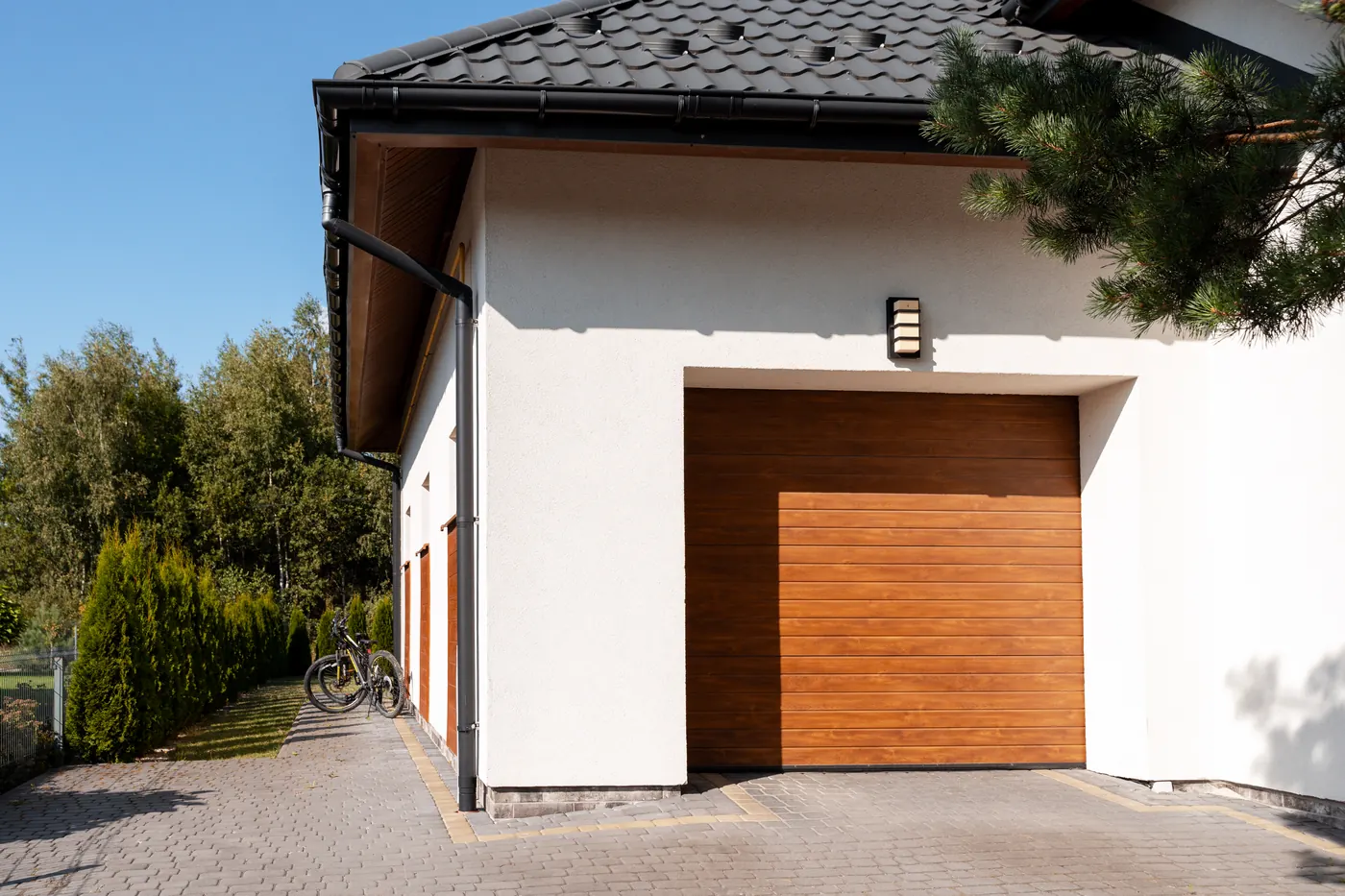
Natural warmth and character, ideal for carriage house and historic looks. Beautiful but heavy and in need of regular refinishing.
Wood Composite
Engineered materials molded to look like real wood. Resists rot and splitting with less upkeep than natural wood.
Fiberglass
Lightweight skins that can mimic wood grain. Resists rust and rot, but can become brittle and crack in very cold weather.
Vinyl
Durable, flexible, and resistant to dents and moisture. Low maintenance but with fewer color and style options.
Steel Doors and What Gauge Means
Steel is by far the most popular garage door material in Germantown subdivisions, and it is easy to see why. Steel doors are strong, come in nearly every style from traditional raised panel to modern flush, and can be insulated to keep an attached garage much more comfortable. Most steel doors are galvanized and finished with a baked-on primer and paint, which helps them resist rust.
The thickness of steel is described by its gauge. The confusing part is that a lower gauge number means thicker steel. A 24-gauge skin is thicker and more dent resistant than a 25-gauge skin, which in turn is thicker than a 27-gauge or 28-gauge skin. Thinner steel is lighter and less expensive, but it dents more easily from a stray basketball, a bike handlebar, or a car door swung open too far. Thicker steel feels more solid, resists dents better, and tends to run more quietly.
Gauge is only part of the story. How the door is built matters as much as how thick the steel is:
- Single-layer steel: one steel skin with no insulation. Lightest and simplest, best for detached garages used for storage.
- Two-layer steel: a steel skin backed by insulation and usually a vinyl or similar backing. A good middle ground for many homes.
- Three-layer steel: insulation sandwiched between two steel skins. The sturdiest and quietest option, with a finished look on the inside of the garage.
In our climate, the weak point of a steel door is usually the bottom section, where salt and meltwater sit through the winter. A chipped finish there can allow rust to start. Touching up chips promptly and rinsing the bottom panel during the salt season helps a steel door last much longer.
Insulated Steel: The Workhorse for Wisconsin Garages
Insulated steel deserves its own discussion, because it is the material we recommend most often for attached garages in Germantown. Insulation does several jobs at once. It slows the flow of heat, which keeps the garage warmer in winter and cooler in summer. It stiffens the door, which helps it resist wind and dents. And it dampens sound, so the door rattles less when it opens and closes.
Insulated doors use either polystyrene panels or injected polyurethane foam. Polystyrene is inserted as rigid sheets and works well at a moderate cost. Polyurethane is foamed into the door, fills every gap, and bonds to the steel, which usually yields a higher R-value for the same thickness and a more rigid door. R-value measures resistance to heat flow, and higher numbers are better. Keep in mind that perimeter seals and a good bottom seal matter just as much as the insulation itself, because cold air finds the gaps.
If you have a bedroom or family room above the garage, a shared wall with the kitchen or mudroom, or you use the garage as a workshop or home gym, an insulated steel door usually makes a noticeable difference in comfort.
Aluminum and Glass Doors
Full-view aluminum and glass doors have become popular on modern and contemporary homes. They use slim aluminum frames with large panes of glass or acrylic, letting in plenty of natural light and creating a clean, striking look. Frames can be finished in black, bronze, silver, or other colors, and the glass can be clear, frosted, tinted, or obscured for privacy.
Aluminum does not rust, which is a real advantage around road salt. It is also lightweight, which puts less load on the springs and opener. On the other hand, aluminum dents more easily than steel, and glass panels insulate far less than an insulated steel section. Insulated glass and thermally broken frames improve things, but a full-view door will still generally lose more heat than a well-insulated steel door. For a heated garage in a Wisconsin winter, that trade-off is worth thinking through. Many homeowners decide the light and style are worth it, especially for detached garages, studios, or homes where the garage faces a private backyard.
See the Materials Up Close
It is much easier to choose when you can feel the difference between gauges and see real finishes. We will bring options to your Germantown home and give you an upfront price before any work starts. Call [Phone Number] to schedule.
Get a Free QuoteNatural Wood Doors
Nothing quite matches the warmth of a real wood garage door. Cedar, hemlock, and other species can be stained to show the grain or painted to match trim, and wood is a natural fit for carriage house, craftsman, and historic-style homes. A well-built wood door can be the centerpiece of a home's front elevation.
Wood also asks the most of its owner, especially in Wisconsin. Moisture from snow, rain, and humid summers can cause swelling, and freeze and thaw cycles can open small cracks where water gets in. Sun exposure fades stain and breaks down finishes. To keep a wood door looking good and protect it from rot, plan to inspect the finish every year and refinish it every few years, more often on south- or west-facing doors. Wood doors are also heavy, which means stronger springs and more load on the opener. If you love the look of wood but not the upkeep, a composite or wood-look steel door may be a better fit.
Wood Composite, Fiberglass, and Vinyl
Wood composite doors use engineered materials, often a mix of wood fibers and resins over a steel or composite frame, molded with realistic grain and panel detail. They resist rot, splitting, and warping better than natural wood, and they can be painted. Many composite doors are insulated as well. They are a popular choice for homeowners who want the carriage house or craftsman look without the refinishing schedule of real wood.
Fiberglass doors use a fiberglass skin, usually over a steel frame with insulation. Fiberglass can carry a convincing wood grain texture, it does not rust or rot, and it holds up well near salt. Its main weakness in our area is cold: fiberglass can become brittle in extreme cold and may crack if struck hard during a sub-zero stretch. It can also fade with long sun exposure over time.
Vinyl doors are tough, flexible, and very resistant to dents, and they are not bothered by moisture or salt. They are easy to clean with soap and water. The trade-offs are fewer color and style options than steel, and the color generally cannot be changed later. Vinyl doors are a practical choice for busy households with kids, bikes, and sports gear in the garage.
How Each Material Handles a Wisconsin Year
Deep Cold
Insulated steel and composite perform best. Fiberglass can turn brittle, and glass doors lose more heat. Wood insulates naturally but can move with moisture.
Salt and Slush
Aluminum, vinyl, fiberglass, and composite resist corrosion. Steel holds up well if chips are touched up. Wood bottoms need a good seal to avoid rot.
Summer Sun and Humidity
Darker colors on any material absorb more heat. Wood and fiberglass may fade, and wood can swell in humid weather without a good finish.
Spring Storms and Wind
Thicker and insulated doors resist flexing better. Lightweight doors may need extra struts on wide openings.
Material also affects door weight, and weight affects the rest of the system. A heavier door needs stronger springs and puts more strain on cables, rollers, and the opener. If you switch materials, the springs must be resized to match. That is a job for a trained technician, never a homeowner, because springs and cables hold dangerous tension. Our spring replacement and cable replacement teams make sure the balance is right.
Maintenance by Material
Every door benefits from basic care: a few times a year, look over the hinges, rollers, and track, lubricate rollers and hinges, clean the photo eyes, and test the auto-reverse by placing a board on the floor under the door. Beyond that, each material has its own needs:
- Steel: wash with mild soap twice a year, rinse salt from the bottom panel in winter, and touch up chips before rust starts.
- Aluminum and glass: clean the glass with non-abrasive cleaner, check glazing seals, and avoid pressure washing close to the frames.
- Wood: inspect the finish yearly, refinish every few years, and keep the bottom edge sealed against moisture.
- Composite: wash regularly and repaint as needed; check seams and the bottom edge for damage.
- Fiberglass: clean gently, avoid hard impacts in extreme cold, and consider a protective coating if it faces strong sun.
- Vinyl: simply wash with soap and water; avoid harsh solvents.
If a section is damaged, you may not need a whole new door. Our panel replacement service can often swap a single section when a matching panel is available.
Getting Help Choosing in Germantown
We are a local company serving Germantown, Richfield, Menomonee Falls, Jackson, Sussex, Mequon, and nearby communities. We work with most major door brands, so we can show you a range of materials rather than pushing a single product line. We will look at your home, ask how you use the garage, and explain which materials make sense and why. You get an upfront price before work starts, and we explain the warranty on parts and labor at the visit. Once you have chosen a material, our garage door styles guide can help you pick the look.
Garage Door Materials FAQ
What is the best garage door material for Wisconsin winters?
For most attached garages, insulated steel is the most practical choice. It handles cold well, resists dents, and needs little upkeep. Composite is a good option if you want a wood look with similar durability.
Is a lower steel gauge better?
Yes. A lower gauge number means thicker steel, which resists dents better and usually feels more solid. Construction and insulation also matter, so look at the whole door.
Will a wood door hold up in Germantown?
It can, with care. Wood needs regular inspection and refinishing to stand up to moisture, freeze and thaw cycles, and sun. Homeowners who keep up with that maintenance often love their wood doors.
Are glass garage doors too cold for a heated garage?
Glass doors lose more heat than insulated steel doors. Insulated glass helps, but if keeping a heated garage warm is a top priority, a solid insulated door or one with a few windows is usually the better choice.
Can I change materials without changing the springs?
Usually not. Different materials weigh different amounts, so the springs must be matched to the new door. A technician should always handle spring sizing and installation.
Which material needs the least maintenance?
Vinyl and factory-finished steel generally need the least care, mostly occasional washing and basic hardware checks.