What a New Garage Door Installation Includes
A garage door is the largest moving part of most houses, and on many Germantown homes it takes up a third or more of the front elevation. When it is dented, drafty, noisy, or simply worn out after decades of Wisconsin weather, replacing it changes how the house looks from the street and how the garage feels every time you walk through it.
A full installation is more than hanging new panels. It covers measuring the opening and the headroom, choosing a door that fits both the space and the way you use the garage, taking down and hauling away the old door, setting new track and springs matched to the new door's weight, sealing the perimeter, and connecting or adjusting the opener so the whole system runs smoothly and safely. We handle each of those pieces so you are not left coordinating several trades or wondering whether the springs were sized right.
Whether you live in an older ranch near Main Street, a 1990s two-story off Pilgrim Road, or a newer subdivision on the edge of the village, the goal is the same: a door that seals well, balances properly, looks right on your home, and gives you years of quiet, dependable service.
Signs It Is Time for a New Door
Many garage doors can be repaired, and we will tell you honestly when a repair makes more sense. Still, there comes a point where putting money into an old door stops paying off. These are the signs we see most often in Germantown garages:
- Several panels are dented, cracked, rusted through, or delaminating, and matching replacement panels are no longer available.
- The bottom section has rotted or rusted from years of road salt, slush, and standing meltwater.
- The garage stays bitterly cold in winter even with the door closed, or the room above the garage never feels comfortable.
- The door is an older single-layer steel or hardboard door that rattles, flexes, and is noisy to run.
- You are planning to sell and want a fast, noticeable improvement in curb appeal.
- The door has been repaired repeatedly, and the repairs keep coming back.
- You want features the old door cannot offer, such as windows, a different style, or better insulation for a workshop.
If you are unsure, start with a garage door repair visit. We can inspect the door, explain what is worn and what is still sound, and lay out both the repair and replacement options so you can decide with the full picture.
Measuring the Opening the Right Way
Good installs start with good measurements. A door that is ordered even slightly wrong can leave gaps at the sides, rub the jambs, or fight with the ceiling. Before any door is ordered, we measure and note several things:
Width and Height
We measure the finished opening at several points, because older framing is rarely perfectly square. Small differences tell us how much the weatherstrip and jamb trim need to make up.
Headroom
Headroom is the space between the top of the opening and the ceiling or lowest obstruction. It decides whether standard track will fit or whether low-headroom hardware is needed.
Side Room
We check the wall space beside the opening for vertical track and mounting brackets. Tight side room is common in older garages with added shelving or utility lines.
Backroom
Backroom is the depth from the opening back into the garage. The horizontal track and the opener rail need enough length to let the door open fully.
Obstructions
Lights, ductwork, storage racks, beams, and attic access hatches all matter. We note anything that could interfere with the track or the door's path.
Floor and Jambs
We look at whether the slab slopes or has settled and whether the wood jambs and header are solid enough to mount new hardware.
Once we have these numbers, we can recommend sizes and hardware that actually fit your garage instead of forcing a standard setup into a space that was never built for it.
Removing and Hauling Away the Old Door
Taking down an old garage door is one of the riskiest parts of the job, because the springs that balance it hold a great deal of stored energy. Torsion springs above the opening and extension springs along the tracks must be unwound or released in a controlled way using the proper tools. Please do not try to remove a door, loosen spring hardware, or cut cables yourself. If the old door has a broken spring or frayed cable, our spring replacement technicians deal with that every day and know how to make the door safe first.
After the tension is safely released, we disconnect the opener, take the sections down one at a time, and remove the old track, brackets, and spring hardware. We check the jambs and header for rot or loose fasteners and point out anything that should be addressed before the new door goes up. When we leave, the old door and hardware leave with us. We haul it away so you are not stuck with a stack of panels in the driveway or a trip to the transfer site.
Insulation and R-Values, Explained Simply
Insulation is one of the most common questions we hear in Germantown, and for good reason. A January morning here can sit well below zero, and an uninsulated door turns the garage into an icebox. Here is the general picture.
R-value is a measure of how well a material resists the flow of heat. A higher number means better resistance. Garage doors generally fall into three construction types: single-layer doors with no insulation, two-layer doors with insulation backed by a vinyl or similar skin, and three-layer doors with insulation sandwiched between two steel skins. Insulation itself is usually either polystyrene panels or injected polyurethane foam. Polyurethane typically offers a higher R-value for the same thickness and also bonds to the steel, which adds stiffness and helps the door resist dents and run more quietly.
It is worth keeping expectations realistic. Even a well-insulated door loses heat around its edges and between sections, so good perimeter seals, a solid bottom retainer, and a tight fit in the opening matter as much as the number on the label. Manufacturers also calculate R-values in different ways, so comparing numbers between brands is not always apples to apples. We focus on the whole picture: the door's construction, the seals, and how you use the space.
- If the garage is attached and shares a wall or ceiling with living space, insulation makes a noticeable difference.
- If you heat the garage or use it as a workshop or gym, a higher-insulation door usually pays off in comfort.
- If the garage is detached and used only for storage, a lighter door may be perfectly adequate.
For a deeper look at how steel, aluminum, wood, and composite compare, see our guide to garage door materials.
Thinking About a New Garage Door?
We will measure your opening, walk you through styles, materials, and insulation options, and give you an upfront price before any work starts. Call [Phone Number] or request a quote online.
Get a Free QuoteWind and Snow Considerations in Southeast Wisconsin
Garage doors in our area deal with more than cold. Spring storms can push strong gusts against a wide double door, and a flexing door can pop out of its tracks or bend sections. Stiffer doors, sturdier struts, and properly anchored track all help a door stand up to wind. If your home faces open fields or sits at the end of a street where wind funnels through, we take that into account when recommending a door.
Snow and ice bring their own problems. Drifts pile against the bottom of the door, meltwater refreezes along the threshold, and the bottom seal can freeze to the concrete overnight. A quality bottom seal made for cold climates stays more flexible in low temperatures, and a properly adjusted opener with correct force settings is less likely to strain or stall when the door is stuck. We also look at whether your slab slopes toward the garage, because that funnels water and slush right to the door.
Road salt deserves a mention too. Salt-laden slush tracked in on vehicles sits on the bottom panel all winter and slowly eats at steel and wood. Doors with good factory finishes, galvanized steel, or non-wood bottom sections tend to hold up better here, and a quick rinse of the bottom panel a few times each winter goes a long way.
What Install Day Looks Like
Most residential installs are completed in a single visit. Here is how the day usually goes:
- Arrival and walkthrough. We confirm the door, color, and options with you, review the opening, and talk about any concerns before tools come out.
- Protecting your space. We clear a work area, protect nearby items, and ask that vehicles be parked outside and away from the door.
- Safe removal. We release spring tension in a controlled way, disconnect the opener, and take down the old door, track, and hardware.
- Prep the opening. We check the jambs and header, install new jamb seal or trim if needed, and make sure the mounting surfaces are solid.
- Set the sections and track. The new sections are stacked and fastened, hinges and rollers are attached, and the track is installed plumb, level, and properly spaced.
- Install and balance the springs. Springs are sized to the new door's weight and wound to the correct tension so the door balances and moves easily by hand.
- Connect the opener. We reconnect and adjust your existing opener or install a new one, then set travel limits and force.
- Test, clean up, and haul away. We test manual and powered operation, the auto-reverse, and the photo eyes, show you how everything works, and take the old door with us.
If your current opener is old, noisy, or lacks modern safety sensors, install day is a natural time to replace it. Our opener installation service pairs well with a new door, and a new opener is usually quieter and easier on the door's hardware.
Permits, HOAs, and Neighborhood Rules
In many communities, replacing a garage door in the same opening is treated as routine maintenance, while changing the size of the opening, altering framing, or adding structural work may require a permit. Rules vary between municipalities and can change over time, so it is always smart to confirm with the village or city before any project that changes the structure. If your project involves widening an opening, we will talk through that with you and point out where you should check local requirements.
Homeowners associations are another factor in many Germantown subdivisions. Some HOAs have guidelines on door style, color, or window placement so the neighborhood keeps a consistent look. If you have an HOA, check its architectural guidelines before choosing a door. We are happy to provide door specifications, color names, and style details you can submit with an approval request. Our garage door styles page is a good place to start narrowing down designs that fit common neighborhood guidelines.
Choosing the Right Door for Your Home
With so many options, it helps to work through a few questions in order. How do you use the garage? A storage-only garage has different needs than one that doubles as a workshop or sits under a bedroom. What does your house look like? The door should match the architecture, trim colors, and roofline. How much maintenance do you want? Painted wood looks wonderful but asks more of you than a factory-finished steel door. And finally, what is your budget range? We will show you options at different levels so you can see what each step up adds.
Everyday Value
Sturdy steel doors with simple panel designs and modest insulation. A reliable, low-maintenance upgrade for many homes.
Comfort-Focused
Thicker, insulated steel doors with better seals. Great for attached garages, rooms above the garage, and heated spaces.
Design-Forward
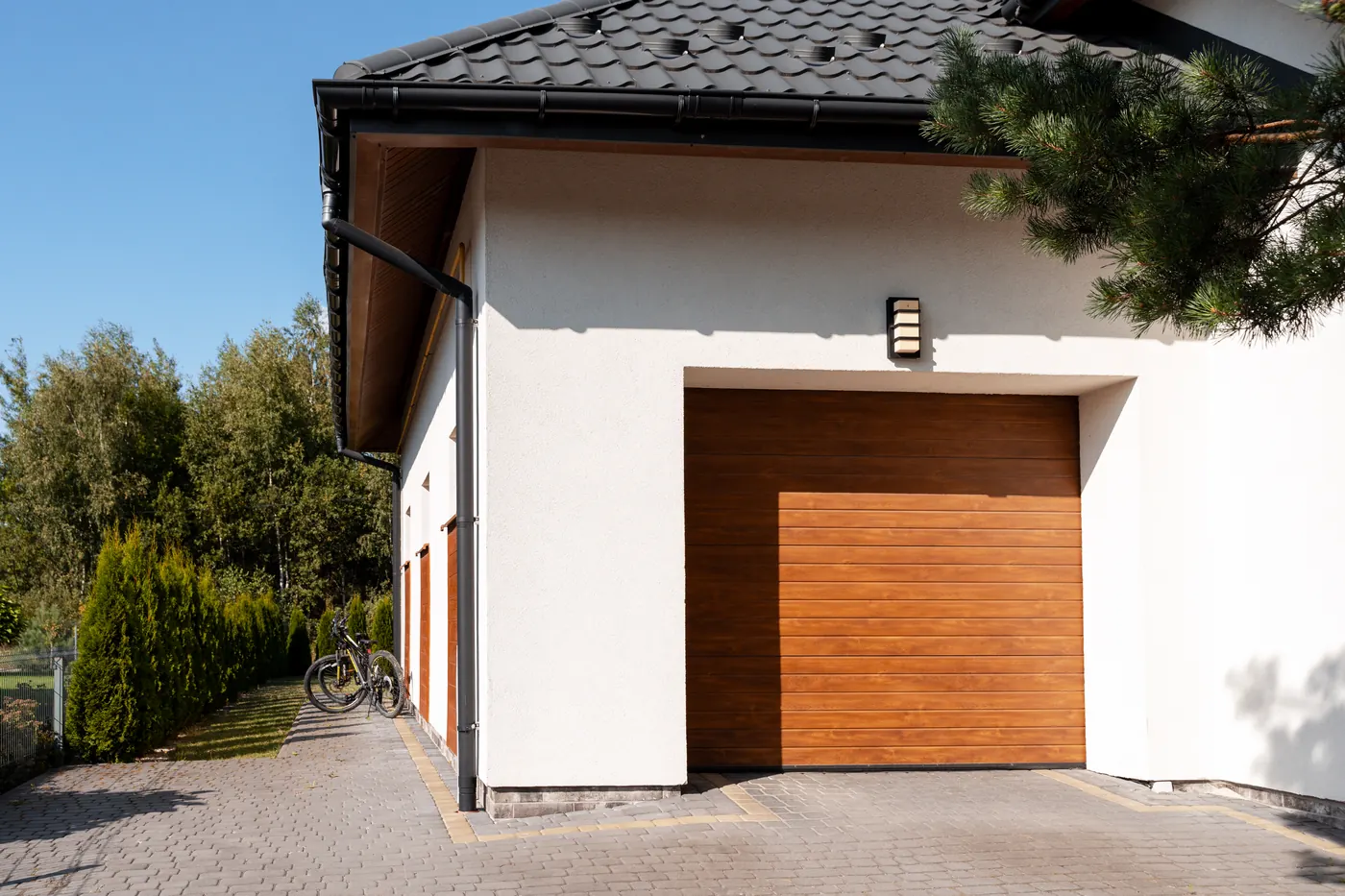
Carriage house, modern full-view, or wood-look doors that make the garage a feature of the home's design.
If you have an unusual opening, an oversized bay, or a specific look in mind, our custom garage doors service covers made-to-order options.
Caring for Your New Door
A new door needs little attention, but a few simple habits keep it running well for years. Every few months, look over the rollers, hinges, cables, and track for anything loose or worn. Lubricate steel rollers, hinges, and the springs with a garage door lubricant, avoiding the tracks themselves. Test the auto-reverse by placing a board flat on the floor in the door's path and closing the door; it should reverse when it touches the board. Keep the photo eyes clean and aligned. Rinse salt off the bottom panel during winter, and wash the door with mild soap a couple of times a year.
Never adjust the springs, the cables, or the bottom brackets that hold cable tension. Those parts are under heavy load and can cause serious injury. If something sounds or looks wrong, call us for a same day repair check instead.
Why Germantown Homeowners Call Us
We are a local garage door company serving Germantown and nearby communities including Menomonee Falls, Richfield, Jackson, Colgate, Mequon, Sussex, and Cedarburg. We understand how our winters treat garage doors, and we recommend doors and hardware with that in mind. You get a clear explanation of your options, an upfront price before work starts, and a crew that treats your home with respect. We work with most major door and opener brands, and we explain the warranty on parts and labor at the visit so you know exactly what is covered.
Garage Door Installation FAQ
How long does a new garage door installation take?
Most single and double residential doors are installed in one visit, often within part of a day. Custom doors, oversized openings, or framing repairs can add time, and we will let you know ahead of time if your project needs longer.
Do you remove and dispose of my old garage door?
Yes. We safely release the spring tension, take down the old door, track, and hardware, and haul everything away when we leave.
Can I keep my existing garage door opener?
Often, yes, as long as it is in good working condition, has working safety sensors, and is rated for the new door. We will check it and adjust it to the new door. If it is old or struggling, we may suggest a replacement.
Is an insulated door worth it in Germantown?
For attached garages, heated garages, or garages with living space above, insulation usually makes a real difference in comfort and noise. For a detached storage garage, a lighter door may be all you need.
Do I need a permit to replace my garage door?
A same-size replacement is often treated as routine, but rules vary by municipality. If you plan to change the opening size or framing, check with your village or city first. If you have an HOA, check its guidelines too.
What should I do to prepare for install day?
Move vehicles out of the garage, clear a few feet of space around the door and along the ceiling path, and let us know about any HOA requirements. We take care of the rest.