What Garage Door Tracks Do
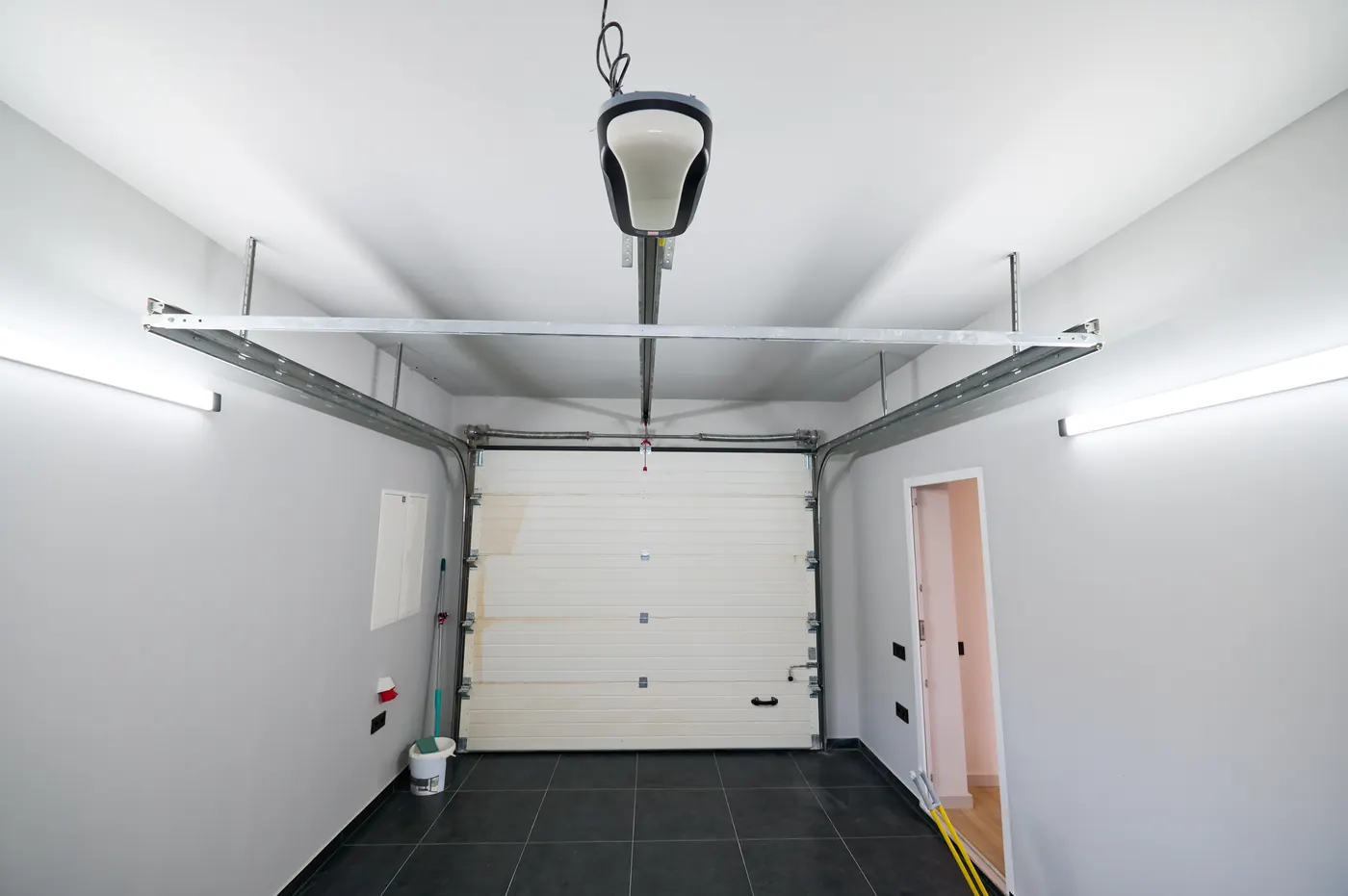
The tracks are the steel rails that guide your garage door up and down. On a standard sectional door there is a vertical track on each side of the opening, a curved section at the top, and a horizontal track that runs back toward the ceiling. The rollers on the edges of the door ride inside these tracks, keeping the door aligned and supported through every inch of travel.
Tracks have to be straight, parallel and set at the right distance from the door. If one side is out of plumb, if a bracket comes loose, or if a section of track gets bent, the rollers stop rolling cleanly. The door may rub, scrape, stall or come out of the track entirely. Because the door can weigh well over a hundred pounds, a door that slips off its tracks is both a security problem and a real safety hazard.
For homeowners in Germantown, track problems often start small with a scrape or a little extra noise, then grow over a season or two. Catching them early usually means a simple realignment rather than a full track replacement.
Signs Your Tracks Need Repair or Replacement
- A visible bend, kink or dent in the vertical or horizontal track
- Rollers popping out of the track or sitting at an angle
- The door rubs, scrapes or squeals on one side as it moves
- Gaps between the door and track that are uneven from top to bottom
- Loose, missing or rusted bolts on the track brackets
- The horizontal track sagging or no longer level with its partner
- The door stops, reverses or hesitates at the same spot every time
- The door has come partly or fully off its tracks
If the door is visibly crooked or hanging off a track, stop using it right away. Running the opener on a door that is out of its tracks can make the damage much worse and can let the door fall.
What Causes Bent and Misaligned Tracks
Vehicle impacts are a frequent cause. A bumper or mirror that catches the bottom of the vertical track can bend it inward, and even a gentle bump can knock a lower bracket loose. Snowblowers, lawn mowers and stored items leaning against the track cause similar damage.
Over time, vibration from daily use loosens the lag screws and bolts that hold track brackets to the wall and ceiling. In older Germantown homes, the wood framing around the opening may have dried out or softened, so fasteners do not hold as firmly as they once did. Once a bracket shifts, the track goes out of alignment and the rollers begin to wear unevenly.
Wisconsin weather adds its own stresses. Road salt and slush cause rust at the bottom of the vertical tracks, which can roughen the inside surface or weaken the steel. Ice that forms in the track bottom during freeze and thaw cycles can push rollers sideways. A worn or broken spring or cable can also make one side of the door hang lower, twisting the door in the track. In that case, the track damage is a symptom, and the springs or cables need attention too.
Vertical, Horizontal and Specialty Track Configurations
Not every garage uses the same track layout. Ceiling height, the space above the opening and how the door is used all affect which track system is right. Here is a quick guide to the setups we work on.
Vertical Track
Runs up each side of the opening and carries the door while it is closed and as it starts to rise. It is mounted to the jamb with brackets and must be plumb and at the correct distance from the door.
Horizontal Track
Holds the door overhead when it is open. It is supported by rear hangers from the ceiling and must stay level and parallel to its partner on the other side.
Standard-Lift Track
The most common residential setup, with a radius curve connecting the vertical and horizontal tracks. It needs a modest amount of headroom above the door opening.
Low-Headroom Track
Used when there is little space above the opening, such as in garages with low ceilings or beams. It often uses a dual horizontal track and special hardware so the door can turn tightly.
High-Lift Track
Extends the vertical track higher before the curve so the door rides up near a tall ceiling. Common with car lifts, workshops and taller garages. It requires matching high-lift drums.
Vertical-Lift Track
The door travels straight up along the wall instead of turning overhead. Found mostly in commercial spaces and very tall garages with plenty of wall height.
Changing from one track configuration to another, such as converting to high-lift for a car lift, also requires the right cable drums, springs and often opener changes. We plan those conversions as a complete system rather than swapping one part.
Our Track Repair and Replacement Process
- Inspect the full system. We check tracks, brackets, rollers, hinges, cables, drums and springs, and measure the door and track alignment from top to bottom.
- Secure the door. The door is clamped or supported so it cannot move. If it is off track or hanging crooked, we stabilize it before touching any hardware.
- Decide between realigning and replacing. Loose or slightly shifted tracks can often be reset and refastened. Tracks that are kinked, creased or badly rusted should be replaced.
- Remove and install track sections. Damaged sections are removed and new tracks of the correct gauge, size and radius are installed, along with new brackets or fasteners where needed.
- Set alignment. Vertical tracks are set plumb at the right spacing from the door, and horizontal tracks are leveled and secured to properly braced rear hangers.
- Check rollers and balance, then test. Bent rollers are replaced, the door's balance is checked, and the opener's travel and auto-reverse are tested through several full cycles.
You get an upfront price before work starts, and if we find other worn parts, we explain them and price them separately so you can choose.
Door Rubbing, Binding or Off Track?
Do not force it. Request a visit and we will inspect the tracks and the rest of the door, then give you a clear repair plan and an upfront price.
Get a Free QuoteOff-Track Doors: What to Do
A door that has come off its tracks is one of the more dangerous situations in a garage. The door's weight may be held by only one cable or by the opener arm, and it can shift or drop without warning. If your door is off track:
- Stop using the opener and do not try to force the door open or closed
- Pull the car out only if you can do so without touching or passing under the door
- Keep children and pets out of the garage
- Do not try to pry rollers back into the track or loosen any brackets
- Take a few photos and call for help
Our same day repair service is built for situations like this. We will secure the door, get it back on track and repair whatever caused it to come off in the first place.
Repair, Realign or Replace: Cost Factors
Many track issues can be fixed by realigning and refastening the existing track, which is usually the least costly route. Replacement becomes the better option when the steel is creased, kinked, cracked or rusted through, because a bent track that has been hammered straight is rarely as strong or smooth as new.
Factors that influence the price include whether one or both sides are damaged, whether the vertical, curved or horizontal portion is involved, the track size and gauge, the configuration (standard, low-headroom or high-lift), and whether rollers, hinges or bottom brackets were also damaged. If the door itself has a bent section from the same impact, panel replacement may be part of the plan. We cover all of this at the visit before any work begins.
Safety and Simple Maintenance
Tracks themselves are not under tension, but they are connected to a system that is. The bottom brackets on the door connect to the lift cables, and those cables are held tight by springs storing a lot of energy. Loosening the wrong fastener can let a cable or bracket fly free. Please do not adjust track brackets near the bottom of the door, release cables or touch torsion springs yourself.
There are safe things you can do. Look over the tracks every few months for bends and loose bolts. Keep the bottom of each vertical track clear of ice, leaves and debris, especially through Germantown winters. Wipe out grime with a dry cloth, but do not grease the inside of the track; rollers should roll, not slide. Lubricate rollers and hinges instead. Test your opener's auto-reverse monthly with a board placed under the door, and keep the photo-eyes clean and aimed at each other.
Why Local Homeowners Choose Us for Track Work
We are based in the area and serve Germantown, Menomonee Falls, Richfield, Jackson, Colgate, Hubertus, Lannon, Mequon, Sussex, Cedarburg and West Bend. We work on most major door brands and understand the mix of older and newer garages here, from 1970s homes with tired framing to new subdivisions with tall ceilings and high-lift setups.
You will get a straight explanation of what went wrong and why, the options for fixing it, an upfront price before work starts, and an explanation of the warranty on parts and labor at the visit. If other parts of the door need attention, our general garage door repair service can handle them at the same time.
Track Replacement FAQ
Can a bent garage door track be straightened?
A slightly bent track can sometimes be carefully straightened, but a track with a sharp kink or crease is weakened and rarely runs smoothly again. In those cases replacement is the safer and longer-lasting fix.
Why does my door keep coming off the track?
Repeated off-track problems usually come from misaligned or loose tracks, bent roller stems, a broken cable or spring that lets one side drop, or an opener force setting that is too high. We look for the root cause, not just the symptom.
Do both tracks need to be replaced?
Not always. If only one side is damaged and the other is straight and solid, replacing one side is often fine. We check that the new track matches in size, gauge and radius so both sides work together.
Can you convert my door to high-lift?
In many garages with enough ceiling height, yes. A high-lift conversion involves new tracks, high-lift drums, springs sized for the new setup and often opener changes. We assess the space and explain what is involved before quoting.
Should I grease my garage door tracks?
No. Grease in the track collects dirt and grit. Keep the track clean and dry, and lubricate the rollers and hinges instead.
Is it safe to use my door if the track is slightly bent?
It is best to have it checked soon. A small bend can catch a roller and pull the door off track, and the problem tends to get worse with use. If the door is binding or crooked, stop using it until it is inspected.